
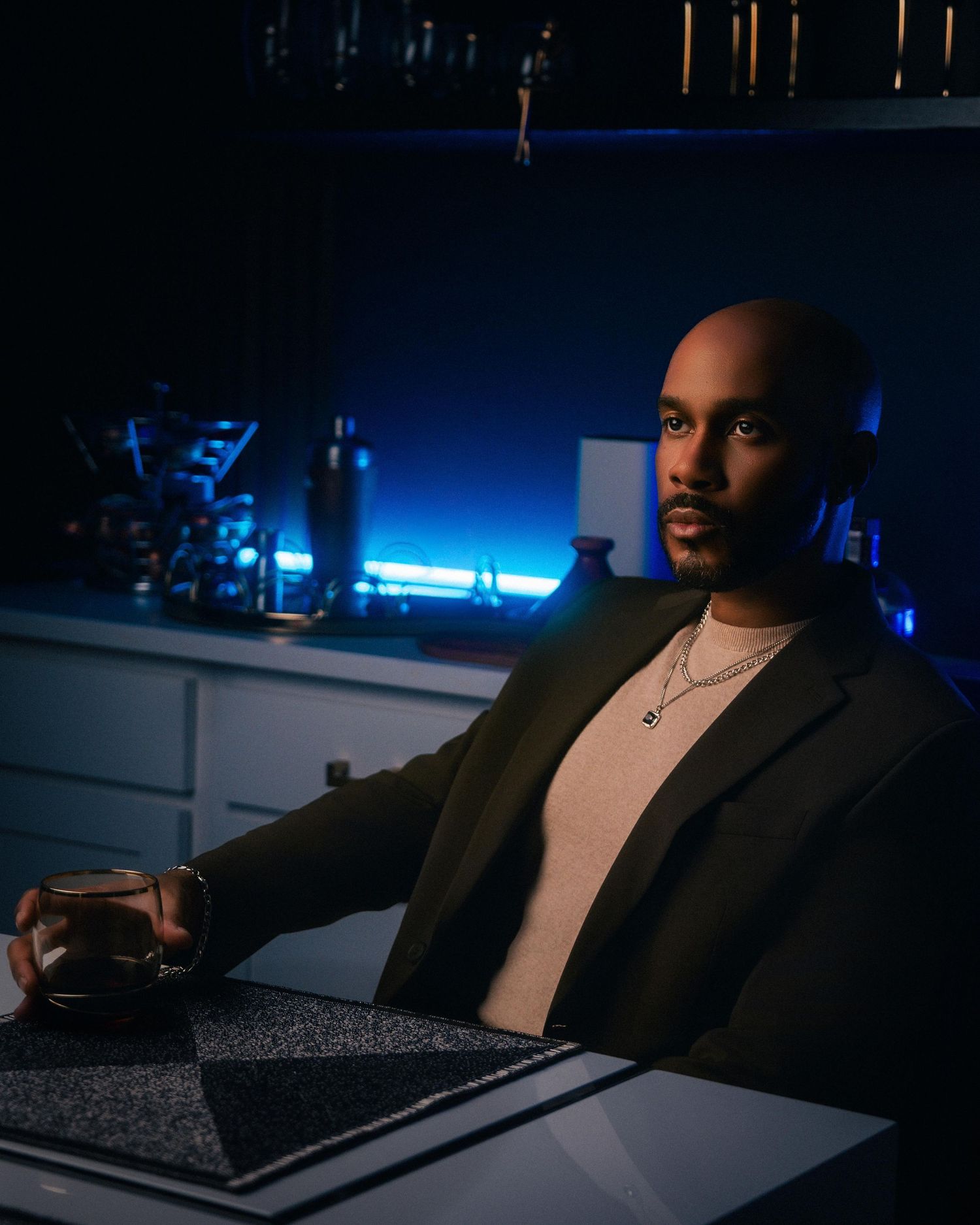
One of the biggest misconceptions about photography is that creating dramatic, cinematic portraits requires an elaborate studio or a spectacular location.
The truth is that compelling images are often created in ordinary spaces through intentional lighting, composition, and posing.
The portrait above was created in a relatively small dining area. While the location itself was simple, careful attention to lighting and composition transformed the scene into something that feels cinematic, moody, and intentional.
Creating Mood Through Lighting
Lighting is the foundation of every great portrait.
For this image, the setup was intentionally simple:
- A large octagonal softbox served as the key light.
- Nanlite RGB continuous lights provided the colored background illumination.
- A CTO (Color Temperature Orange) gel was added to the key light.
The combination of warm and cool tones creates one of the most effective color contrasts in cinematic photography. The warm orange light on the subject contrasts against the cool blue background, creating separation, depth, and visual interest. This technique is commonly used in film and television because it naturally draws the viewer's eye toward the subject.
The Power of Rembrandt Lighting
The key light was positioned using a classic Rembrandt lighting pattern in a short-lighting configuration. In simple terms, the side of the face turned away from the light is facing the camera.
This lighting approach:
- Creates depth and dimension
- Defines facial structure
- Adds mood and drama
- Directs attention toward the eyes
One of the reasons cinematic portraits feel so engaging is because they rarely illuminate everything evenly. Instead, light is carefully shaped to create contrast and emphasize important features.
Don't Be Afraid of Shadows
Many photographers spend their early years trying to eliminate shadows. Cinematic photography often does the opposite.
Shadows create mystery, depth, and atmosphere. The key is ensuring the shadows still contain detail rather than becoming completely black. When shadows retain subtle information, they add mood without sacrificing image quality.
Learning to embrace shadows was one of the biggest shifts in my own photography journey. Often, the most impactful images come from what you choose not to illuminate.
Working in Tight Spaces
One challenge during this shoot was space. The large octagonal softbox produced beautiful soft light, but it also occupied a significant portion of the room. Because of this, composition became especially important.
I spent time experimenting with:
- Camera position
- Shooting angle
- Subject placement
- Background elements
Small adjustments can dramatically change how a scene feels. In tighter environments, thoughtful composition often becomes just as important as the lighting itself.
Bringing the Look Together in Post-Processing
The final image was enhanced through color grading during editing. The goal wasn't to drastically alter the photograph, but rather to reinforce the mood already created in camera.
Subtle adjustments to:
- Color balance
- Contrast
- Shadow depth
- Blue and orange color separation helped strengthen the cinematic feel while maintaining a natural appearance.
Final Thoughts
What I love most about this portrait is that it demonstrates an important principle:
You don't need an extraordinary location to create an extraordinary image.
With intentional lighting, thoughtful posing, careful composition, and a willingness to embrace shadow, even an everyday space can become a cinematic scene. Photography isn't always about finding the perfect environment. Sometimes it's about learning to see the potential in the space that's already in front of you.
About J Jones Visuals
J Jones Visuals creates refined editorial, story-driven portraits, headshots, lifestyle imagery, and event photography throughout the Atlanta area. Every session is designed to highlight personality, emotion, and authentic moments through intentional lighting and thoughtful composition.